

The Integrated Resilience Method
A Whole-Person System for Women 50+ Living With Chronic Low Back Pain
The Integrated Resilience Method™ is the framework behind Agnes's article, now published in the American Journal of Lifestyle Medicine. The version you can read here is an accessible overview written for you, not the academic journal article. Same framework, evidence-informed and explained in plain English.
Executive Summary
Chronic low back pain can shrink a woman’s world. It can affect how she moves, sleeps, works, cares for others, and sees herself. For women 50 and older, the picture is often more complicated because menopause, sleep disruption, loss of muscle mass, stress, and years of putting others first can all add to the burden of pain. The Integrated Resilience Method was created to meet that reality with a practical, evidence-informed, whole-person approach.
This method rests on six connected pillars: Resilient Identity, Pain Signal Mastery, Nervous System Recalibration, Capacity Restoration, Anti-Inflammatory Foundation, and Sustainable Performance Habits. These pillars do not work in isolation. They support one another and create a stronger system than any one strategy alone. That view fits what pain science and rehabilitation research have shown: chronic low back pain is not explained by the spine alone, and lasting improvement usually comes from combining education, movement, self-management, behavior change, and supportive lifestyle practices.
The Integrated Resilience Method is not a cure claim. It is a framework for better function, better confidence, and better daily living. The goal is to help women reduce fear, rebuild capacity, support recovery, and live an active life even if some pain remains. That is a more honest promise, and it is also a more credible one.
Why this method matters
Many women with chronic low back pain have been told, directly or indirectly, that their back is damaged, weak, or failing. That message can be harmful. When a person believes pain always means damage, she may brace, avoid movement, and build her life around protection. Over time, that pattern can make pain more persistent, confidence lower, and function worse.
The research supports a more complete view. Chronic low back pain is shaped by physical factors, pain processing, beliefs, stress, sleep, daily demands, and social context. In women 50+, menopausal change may also affect pain burden, spine health, recovery, and general well-being. A good framework must respect that complexity without making the problem feel hopeless.
That is where the Integrated Resilience Method begins. It asks a better question than “What is wrong with my back?” It asks, “What does my whole system need to move, adapt, and recover more effectively?” That question is more useful because it leads to action.
What experts expect
Experts in pain science and rehabilitation will look for three things right away. First, they will want to see that this framework fits the biopsychosocial model instead of replacing one oversimplified explanation with another. Second, they will want clear language about what the method does and does not promise. Third, they will want the claims to match the strength of the evidence.
This article does that. It presents the method as evidence-informed self-management, not as a miracle or a stand-alone cure. It places exercise, education, self-efficacy, and self-management at the center of the framework. It also includes nutrition and supplements as helpful supports, while recognizing that they work best when paired with active rehabilitation and behavior change.
That balance matters. It makes the method more credible to clinicians and more trustworthy to women living with pain.
The six pillars
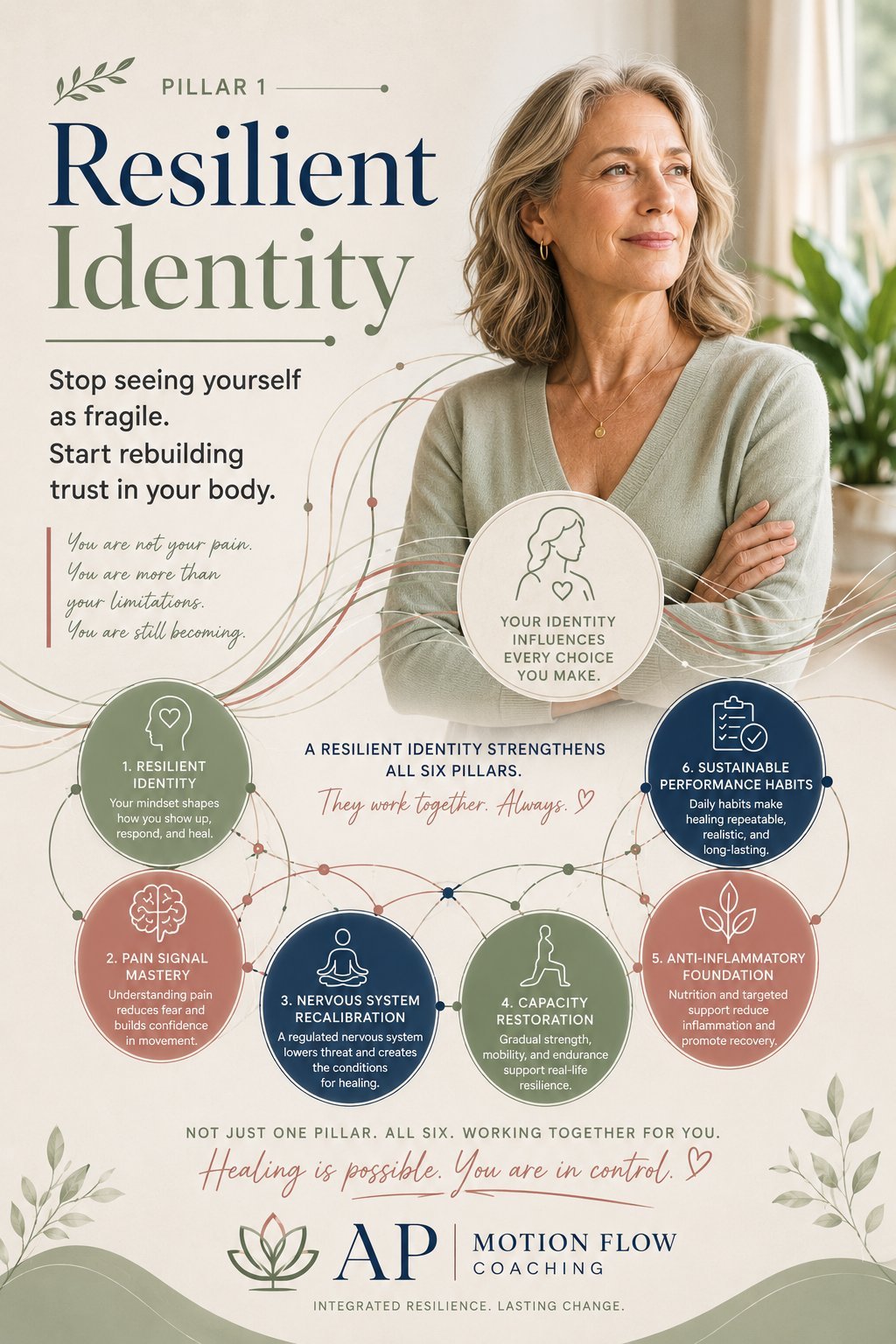
1. Resilient Identity
Recovery begins with identity. If a woman sees herself as broken, fragile, or permanently limited, every flare feels like proof that her body is failing. If she begins to see herself as adaptable, capable, and still able to improve, she has a better chance of taking action instead of retreating.
Resilient Identity means shifting from a damage-based story to a capacity-based story. It does not deny pain. It refuses to let pain define the whole person. That matters for women over 50, especially those who have spent years caring for everyone else and ignoring their own needs.
Research on self-efficacy supports this pillar. People do better when they believe they can influence their pain experience and function. That belief does not solve everything, but it helps open the door to change.
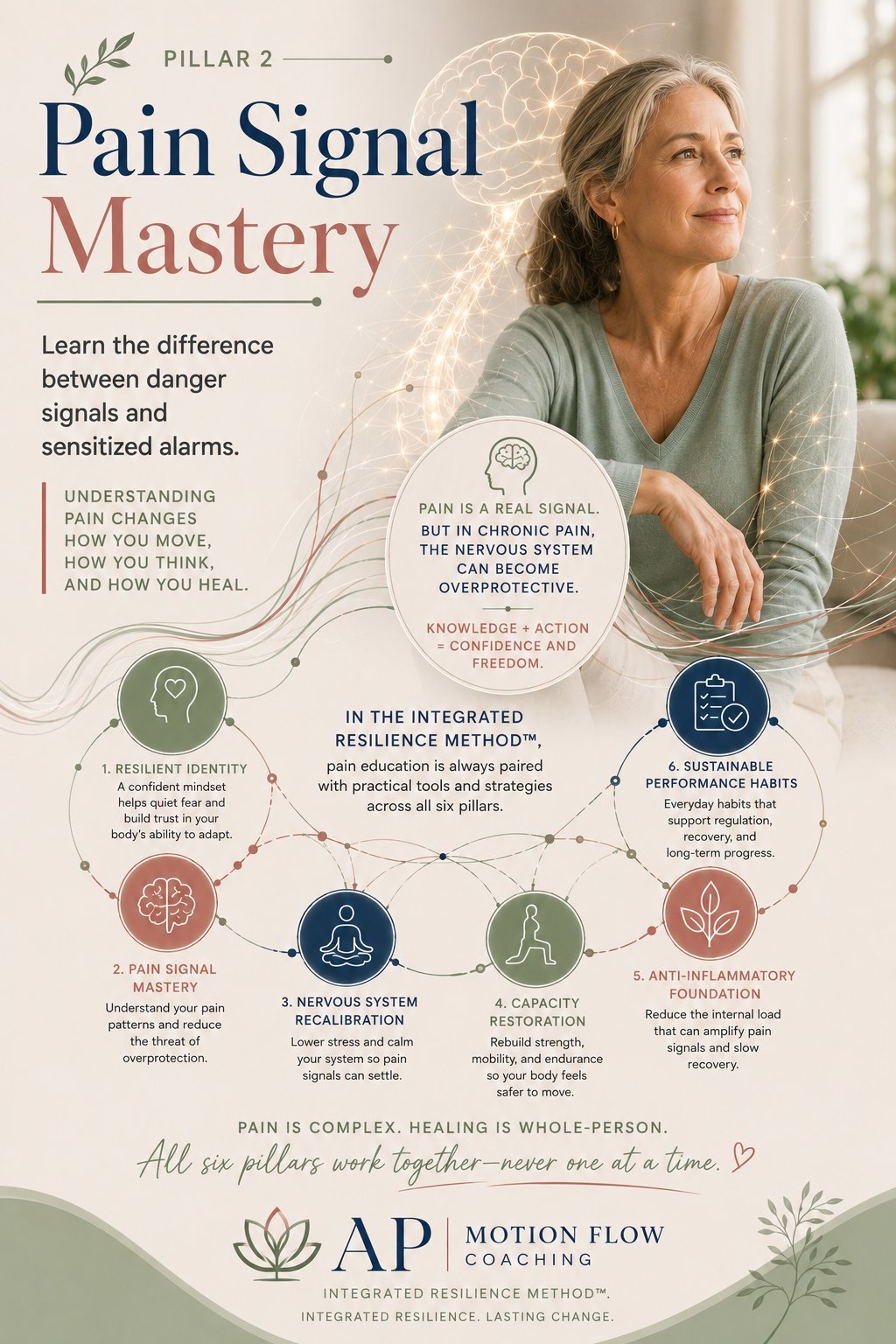
2. Pain Signal Mastery
Pain Signal Mastery teaches a woman how to understand pain without fear. Pain is a real signal, but in chronic pain that signal can become overprotective. The nervous system may sound an alarm even when the body is not in danger.
This pillar helps a woman learn the difference between a warning that needs attention and a sensitized alarm that needs calming. She learns her triggers, patterns, and flare signs. She stops guessing. She stops assuming that every bad day means new injury.
Pain education works best when it is tied to action. Research shows that pain neuroscience education is more useful when it is combined with movement or physical therapy than when it is given as information alone. In other words, knowledge should change behavior, not just fill space.
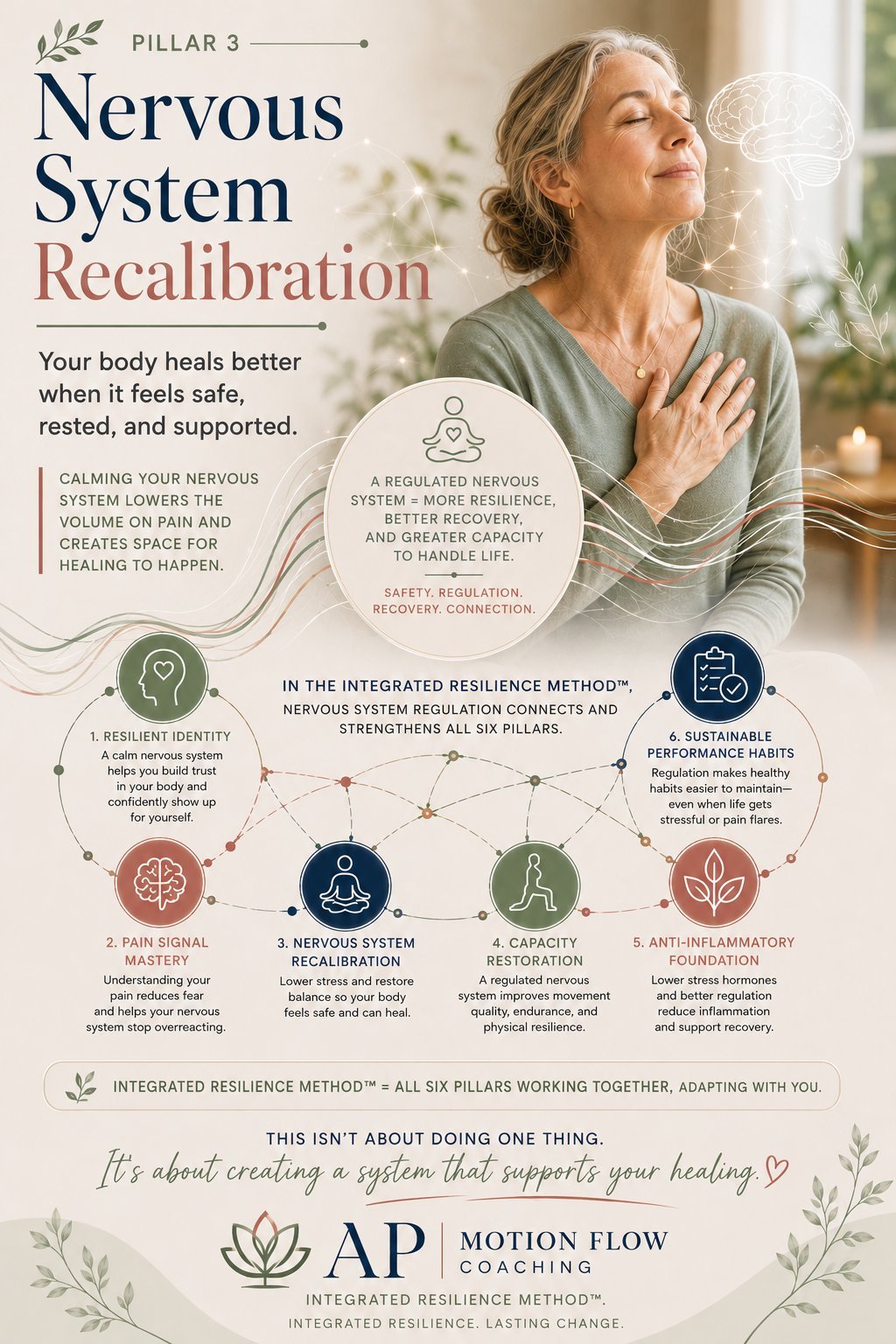
3. Nervous System Recalibration
This pillar focuses on helping the body feel safe again. A nervous system that has been under stress for a long time can stay guarded. That guarded state can make pain feel louder, movement feel riskier, and recovery feel slower.
Nervous System Recalibration includes practices that reduce threat and support regulation. These can include paced breathing, body awareness, restorative sleep, quiet pauses, mindfulness, and gentle movement. The goal is not to “think positive.” The goal is to lower the load that keeps the body on alert.
Experts will expect careful wording here. It is fair to say that stress and pain interact, and that calming practices can support self-regulation. It is not necessary to overstate any one theory. What matters is the practical effect: a less guarded system is more ready for movement, learning, and recovery.
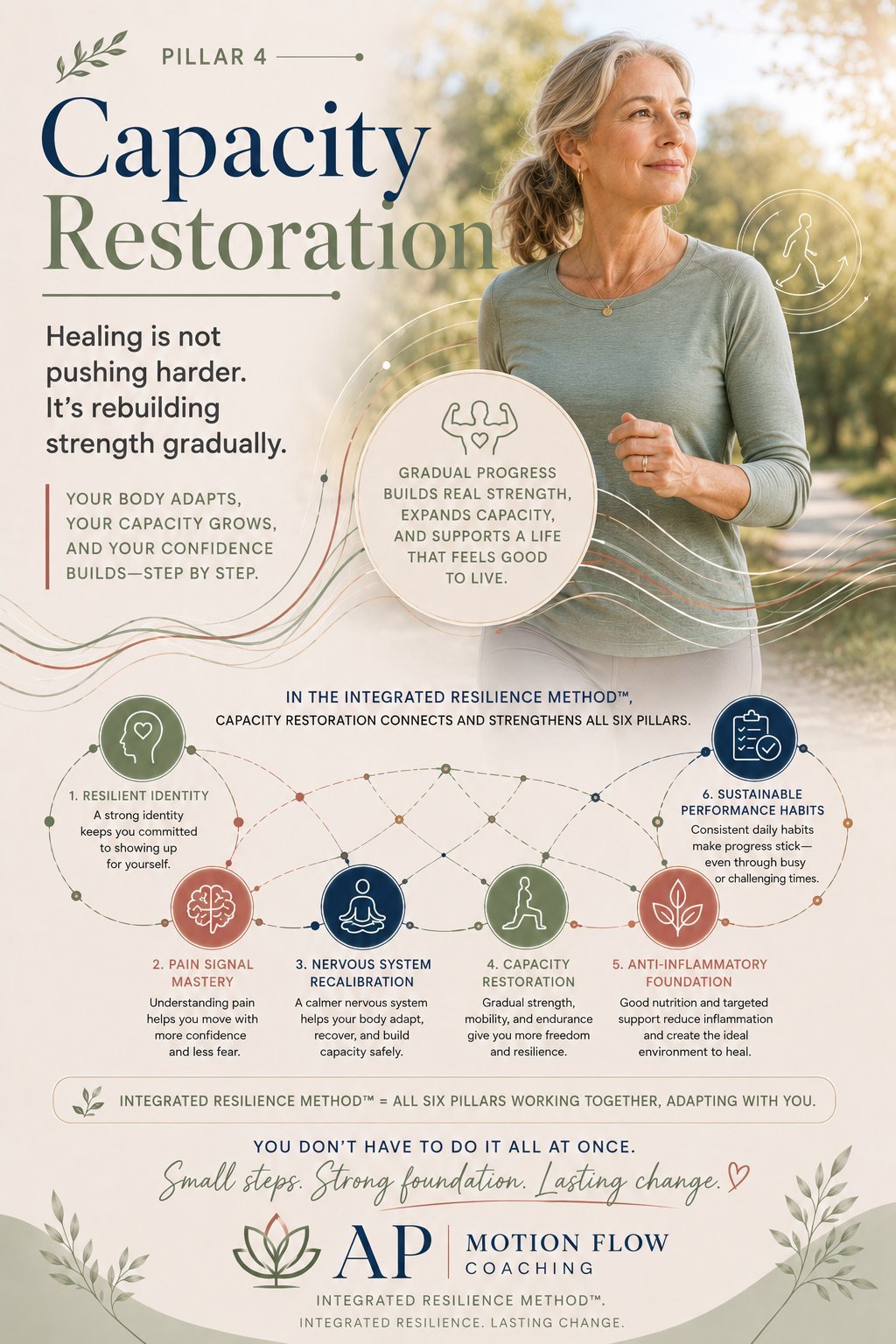
4. Capacity Restoration
Capacity Restoration is the rebuilding of strength, endurance, mobility, and confidence. This is not about proving toughness. It is about restoring what pain and inactivity have taken away.
A woman does not need extreme exercise to rebuild capacity. She needs the right dose, repeated often enough to matter. Research supports graded activity and exercise as core parts of chronic low back pain care, including for older adults and postmenopausal women. The key is to progress without panic.
This pillar is important because it gives the body reasons to trust movement again. As capacity improves, daily tasks become less threatening. Walking, lifting, cleaning, working, and caring for family become more manageable. That is not a small gain. It is the difference between surviving the day and living it.
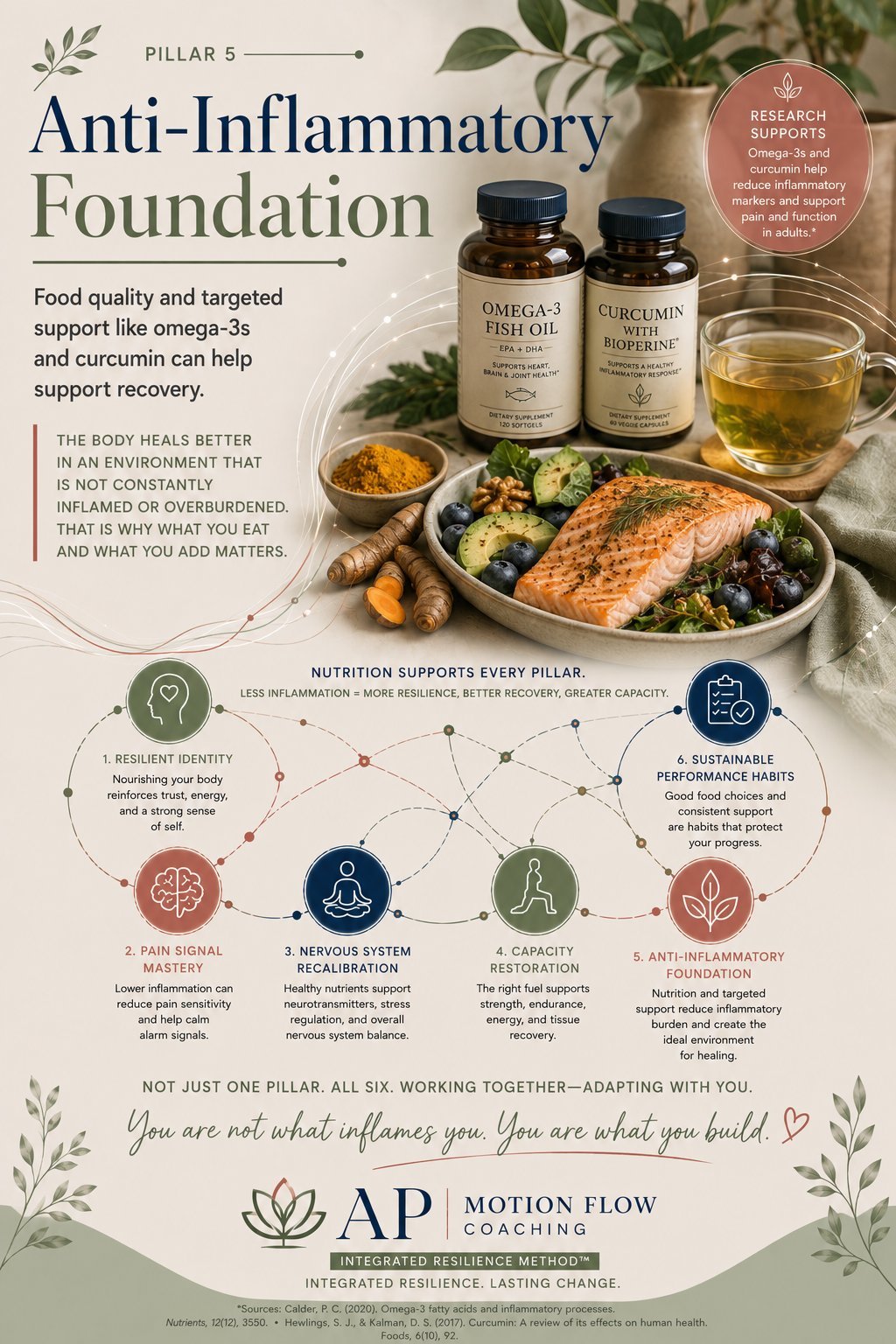
5. Anti-Inflammatory Foundation
The body heals better in an environment that is not constantly inflamed or overburdened. That is why food quality matters. Anti-Inflammatory Foundation does not mean perfection, restriction, or diet culture. It means choosing foods that help lower unnecessary biological stress and support steadier energy and recovery.
The evidence is strongest when this pillar is framed as support rather than cure. Dietary patterns matter, and some nutrients may help. Omega-3 fatty acids have evidence for helping chronic pain, and curcumin shows promise in pain-related conditions. But these are adjuncts, not replacements for movement, education, or self-management.
For women 50+, this pillar is especially relevant because menopause and aging can affect body composition, sleep, inflammation, and metabolic health. Still, it is important not to overstate the role of inflammation as the single cause of pain. The more honest message is also the stronger one: food can support recovery, but it is only one part of the system.
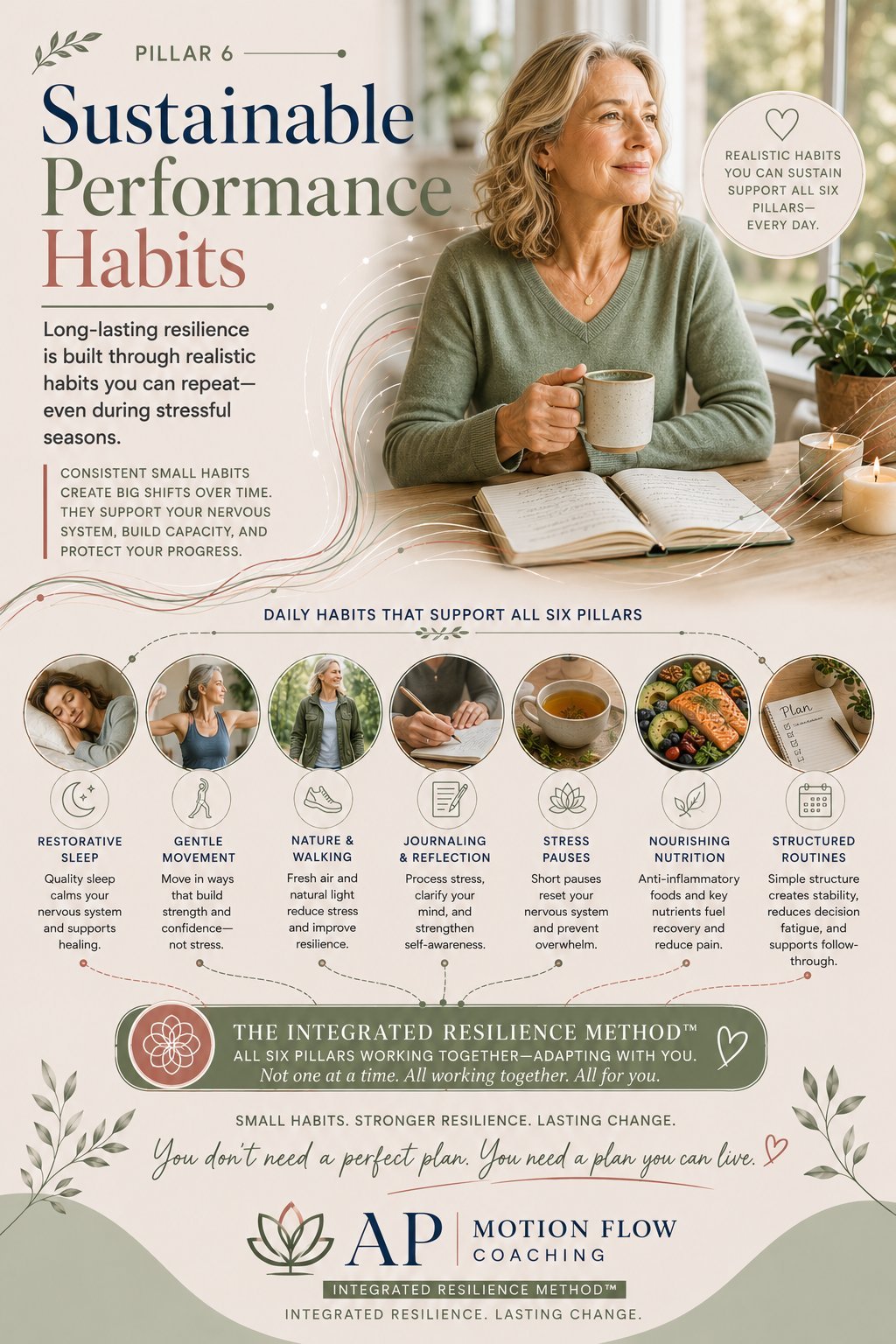
6. Sustainable Performance Habits
This final pillar turns the method into real life. A woman does not improve from occasional effort. She improves through routines that fit her actual life and can survive hard weeks.
Sustainable Performance Habits include sleep routines, movement anchors, meal patterns, flare plans, stress breaks, and simple check-ins. These habits should feel realistic and repeatable. The best plan is not the most ambitious one. It is the one she can keep using when life gets busy or pain flares.
This pillar matters because behavior change is hard. A woman can understand her pain well and still struggle to follow through under pressure. Habits close that gap. They make the healthy choice easier to repeat and less dependent on willpower.
How the pillars work together
The six pillars are not separate boxes. They are connected parts of one system.
Resilient Identity helps a woman approach pain with less fear. Pain Signal Mastery helps her understand what her body is saying. Nervous System Recalibration helps lower threat and guard. Capacity Restoration rebuilds what pain has reduced. Anti-Inflammatory Foundation supports the body from within. Sustainable Performance Habits keep the entire method going.
Some women will begin with education. Others will begin with breathing, sleep, movement, or food. The order can change. The logic does not. The purpose is to improve the whole system, not just one symptom.
This also helps explain why the method can be persuasive to women 50+. It does not ask them to choose between mindset, movement, nutrition, or rest. It shows them how each one supports the others.
What this method is not
The Integrated Resilience Method is not a promise of a pain-free life. It is not a replacement for medical evaluation when serious symptoms appear. It is not a substitute for surgery, medication, or other medical care when those are truly needed.
It is also not a claim that pain is “all in the mind.” That idea is too small and too harmful. Pain is real. The nervous system is real. So are weakness, stiffness, fatigue, inflammation, fear, and life stress. The method respects all of that.
What it offers is a smarter way to respond. It gives women tools to reduce fear, improve function, and build confidence in daily life. That is a meaningful goal, and it is one that fits the evidence.
Why this approach is credible
The method is credible because it is built on known parts of chronic pain care. Exercise, education, self-efficacy, and self-management have strong support in the literature. Those are the anchors of the framework. They are not trendy add-ons. They are the foundation.
Nutrition and supplements can support the process, but they should stay in the supporting role. That is especially true for omega-3s and curcumin. They may help, but they do not replace the harder, more important work of changing how the body moves, responds, and recovers.
That hierarchy is important because it keeps the method honest. A woman deserves honesty. She does not need a fantasy. She needs a framework that respects her body, her intelligence, and her life.
What women can expect
Women who use the Integrated Resilience Method consistently may notice several shifts over time. They may feel less afraid of movement. They may understand their flares better. They may recover more quickly after strain. They may begin to trust their bodies again.
They may also notice practical gains. Walking may feel easier. Sleep may improve. Energy may become steadier. Daily tasks may feel less overwhelming. None of this requires a perfect body or perfect discipline. It requires a system that works with real life.
That is the real promise of the method. Not perfection. Not instant results. A stronger, steadier way to live with and beyond chronic low back pain.
Bibliography
- Abiko, T., et al. (2025). Pain neuroscience education with physical activity improves outcomes in older women with chronic low back pain. Scientific Reports.
- Cancela, J. G., et al. (2025). The effectiveness of pain neuroscience education: An umbrella review. Annals of Physical and Rehabilitation Medicine.
- Cruz-Diaz, D., Martínez-Amat, A., Osuna-Pérez, M. C., Torre-Cruz, M. J., & Hita-Contreras, F. (2016). Short- and long-term effects of a six-week clinical Pilates program in addition to physical therapy on postmenopausal women with chronic low back pain: A randomized controlled trial. Disability and Rehabilitation, 38(13), 1300–1308.
- Edmond, S. L., et al. (2022). The association between self-efficacy on function and pain outcomes in patients with chronic low back pain receiving physiotherapy. Physiotherapy Theory and Practice.
- Elma, O., & Yilmaz, S. T. (2023). Proinflammatory dietary intake relates to pain sensitivity in chronic nonspecific low back pain: A case-control study. Spine.
- Gordon, R., & Bloxham, S. (2016). A systematic review of the effects of exercise and physical activity on non-specific chronic low back pain. Healthcare, 4(2), 22.
- Hagger, M. S., et al. (2025). Illness and treatment beliefs and health outcomes in chronic pain: A meta-analysis. Psychology & Health.
- Jackson, T., et al. (2014). Self-efficacy and chronic pain outcomes: A meta-analytic review. The Journal of Pain.
- Kamper, S. J., et al. (2014). Multidisciplinary biopsychosocial rehabilitation for chronic low back pain: Cochrane systematic review and meta-analysis. Cochrane Database of Systematic Reviews.
- Kerns, R. D., & Burgess, D. J. (2022). Self-management of chronic pain: Psychologically guided core competencies for providers. PM&R.
- Keeler, C. E., et al. (2025). The role of nutrition in low back pain: A narrative review. American Journal of Lifestyle Medicine.
- Kim, J., et al. (2022). Pro-inflammatory diet associated with low back pain in adults aged 50 and older. International Nursing Review.
- Marini, M., et al. (2017). Low back pain in healthy postmenopausal women and the effect of physical activity: A secondary analysis in a randomized trial. PLOS One, 12(5), e0177370.
- Morales-Muñoz, I., et al. (2023). The effect of an anti-inflammatory diet on chronic pain: A pilot study. Frontiers in Nutrition.
- Nijs, J., et al. (2025). Pain neuroscience education with physical activity improves physical and psychological outcomes in older women with chronic low back pain. Scientific Reports.
- Searle, A., et al. (2015). Exercise interventions for the treatment of chronic low back pain: A systematic review and meta-analysis. Clinical Rehabilitation, 29(12).
- Treede, R. D., et al. (2025). Opportunities for chronic pain self-management: Core psychological principles and neurobiological underpinnings. The Lancet.
- Vos, T., et al. (2022). Physical activity and low back pain: A critical narrative review. Annals of Physical and Rehabilitation Medicine.
- Wylde, V., et al. (2013). Self-management interventions for chronic pain. Pain Management, 3(2), 81–89.
- Xie, L., et al. (2025). Effects of omega-3 fatty acids on chronic pain: A systematic review and meta-analysis. Frontiers in Medicine.
- Wiercioch-Kuzianik, K., et al. (2015). Low back pain in women before and after menopause. Menopause Review.
